Keep Your Teen Safe
A Calm, Practical Guide to Protecting Your Teenager from Party Dangers, Sextortion, Online Predators, and Manipulation.
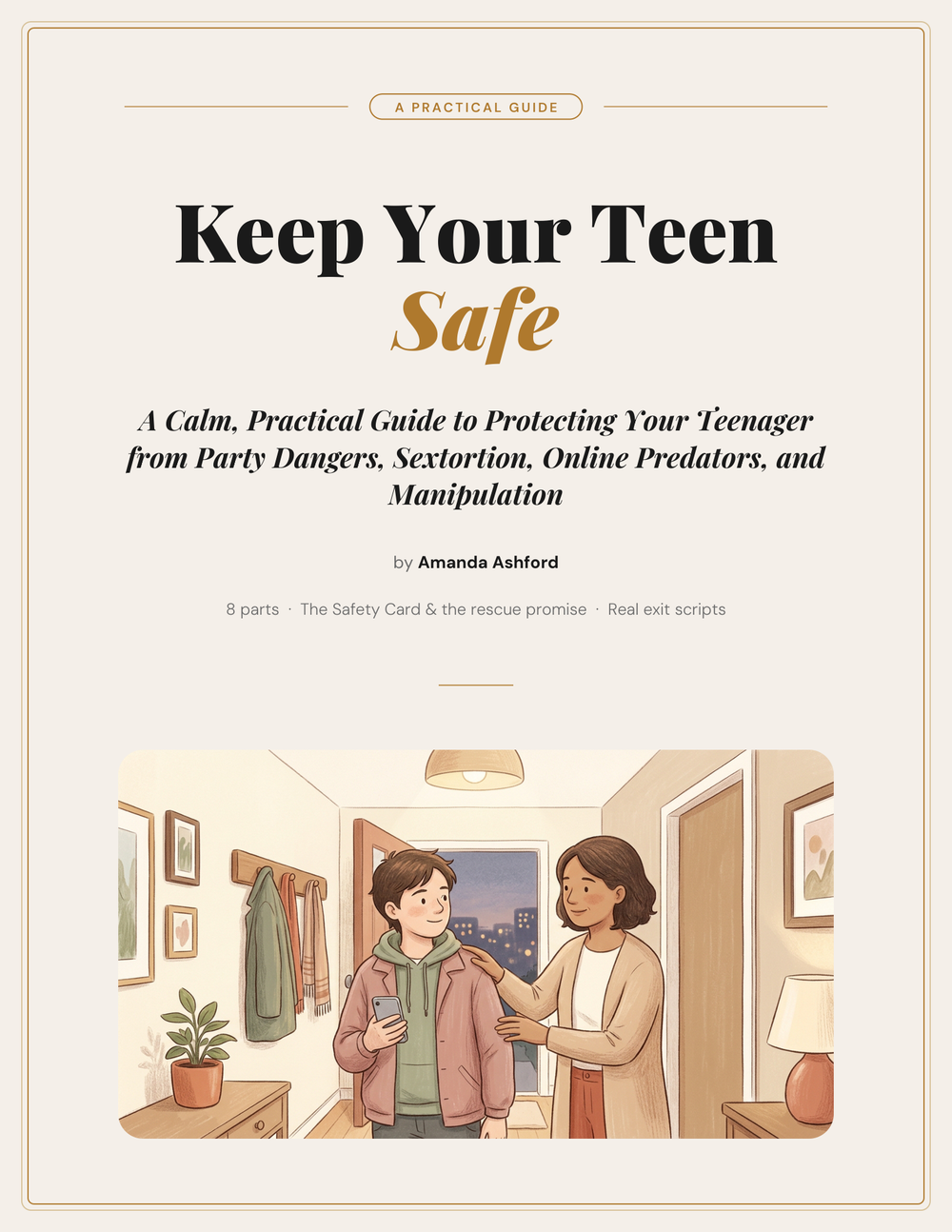
- 56-page PDF, read in one evening, use it that night
- Before the party: the 60-second check at the door, and the two-hour "Red Zone" where a normal night quietly turns
- The rescue promise that works better than any rule you'd have to enforce
- 5 exit lines your teen can use to leave any room, without looking lame
- Drinks, fake pills, and the older person who "gets" them, each in the no-lecture words that actually stick
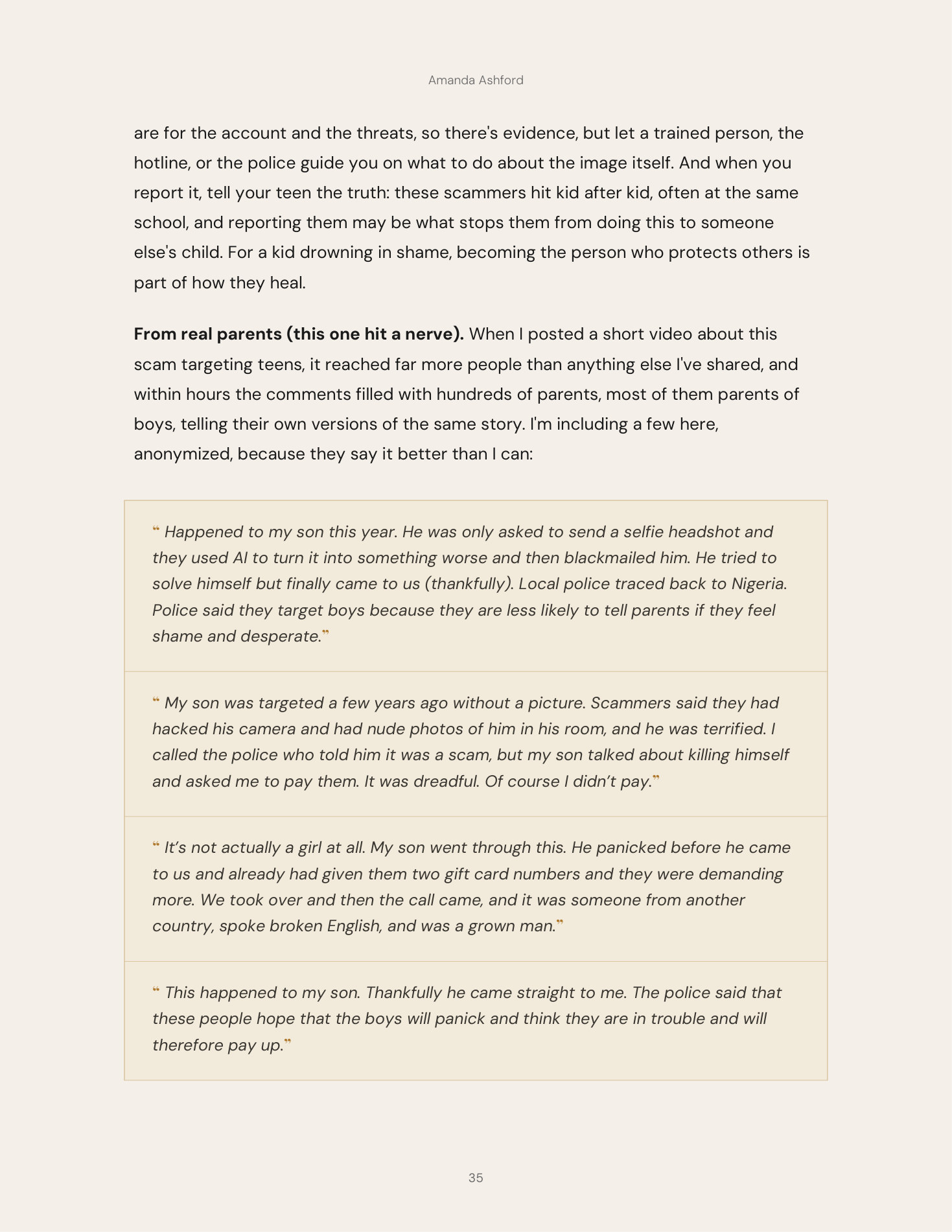
- The online layer: sextortion, grooming, and AI fake nudes, plus what to do the night one lands
- If it's already happened: the exact first words and first moves, so you don't make it worse
What Keeps a Teen Safe When You're Not in the Room
Here is the uncomfortable truth every parenting book dances around: you can't rule your teenager into safety. You can set the curfew, take the phone, ban the party, and your teen will still, at some point, be standing in a room you didn't approve of, next to a person you never met, holding a drink they didn't pour. Not because they're bad. Because they're sixteen, and that's the whole job of being sixteen.
So the question isn't how to control every room. It's a smaller, more powerful one: when your teen is somewhere wrong, what makes them call you instead of staying?
The single most powerful thing you can do is make yourself the safest, cheapest, easiest call they can possibly make.
Most teens don't call for help for one reason, and it isn't the danger. It's the math they do in their head: if I call, I'm in trouble. The party I wasn't supposed to be at. The drink. The lie about whose house it was. They weigh the trouble against the danger, and sometimes, the nights that end badly, the danger wins that math.
The fix is a promise, said out loud, in a calm moment, more than once:
"If you're ever somewhere that feels wrong, for any reason, you call me. I will come get you, any hour. And you will not be in trouble that night. Not for the party, not for the drink, not for how you ended up there."
Every clause is doing a load-bearing job. "Any hour" deletes the calculation that it's too late to bother you. "You won't be in trouble" removes the single biggest reason teens don't call. "Not for how you ended up there" is the one most parents leave out, and it matters most, because the nights they'll most need you are the nights that didn't go the way they told you they would.
That promise is the load-bearing wall of the whole guide. Around it sits the rest: the 60-second vetting before they walk out the door, the five exit scripts so leaving never means looking lame, the plain talk about the cup and the fake pill, how to read a manipulative older person, and what to do the night something happens online. Not a fear list. A calm, do-this-tonight system.
You can start with just the promise, tonight, for free. If you want the rest of the system, the words, the scripts, and the four printable companions, it's all below.
What's Inside
Four Bonuses, Included Free
Companion PDFs you can print, screenshot, or keep on a phone. Built for the moment, when there's no time to open the full guide.
Written for the teen, in their language: five ways to leave any room without looking lame, how to set up a code text, the cup-and-pill rules with no lecture, and exactly what to do if a photo gets out. The one to text them or drop on their phone.
Your teen just said someone online is threatening to share a photo. This is the calm, correct first move: don't pay, screenshot, block, and exactly who to report to, with the numbers for the US, UK, Australia, and Ireland. The one you'll be grateful is one tap away.
Lock down the phone in about 45 minutes, together, no spyware. The exact settings to change in Snapchat, Instagram, TikTok, and location sharing, as a checklist you tick off. Closes the doors strangers use to get in.
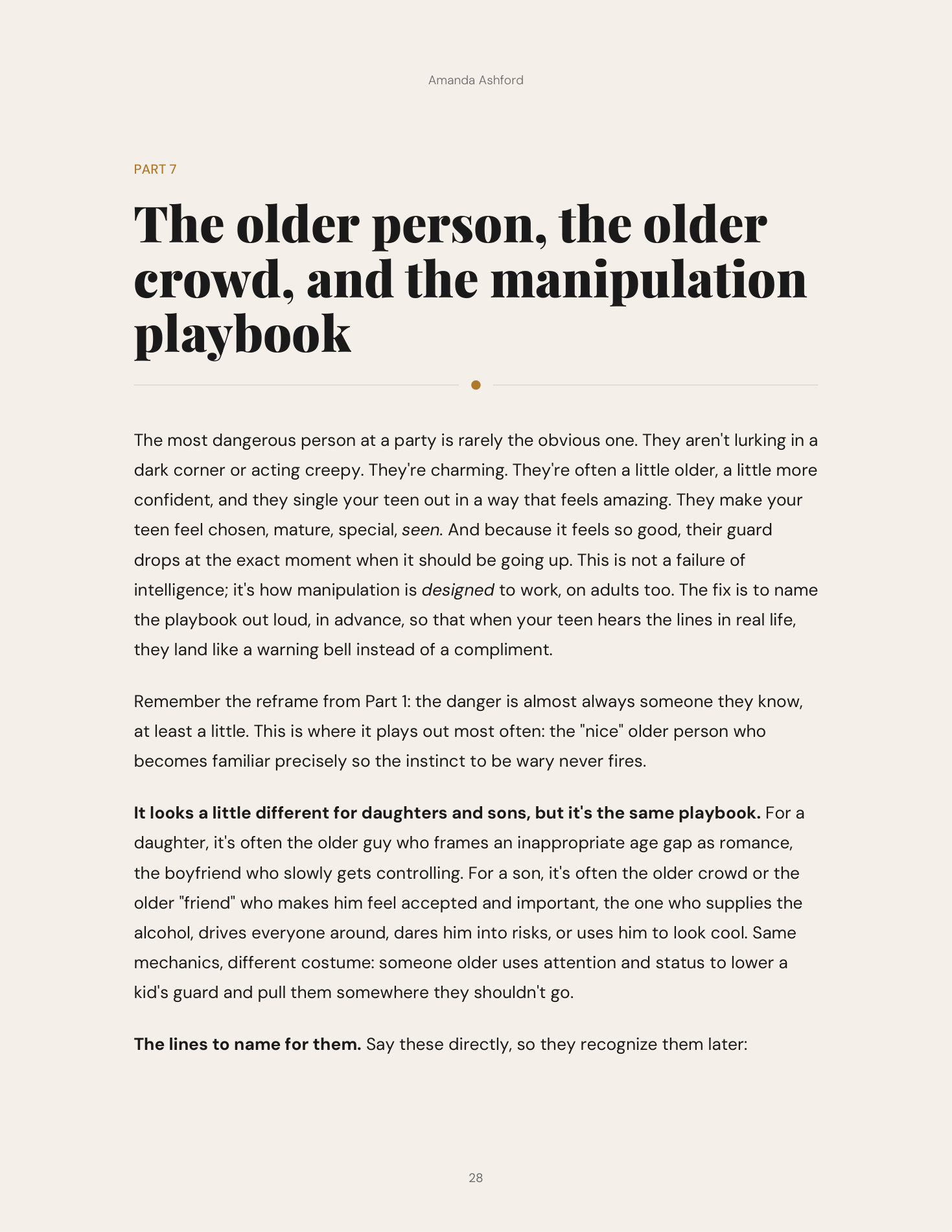
The quiet signs an adult or an "online friend" is working on your kid, by relationship, secrecy, isolation, and escalation. One or two can be nothing. A cluster is a conversation, and this tells you exactly how to have it.
Peek Inside the Guide
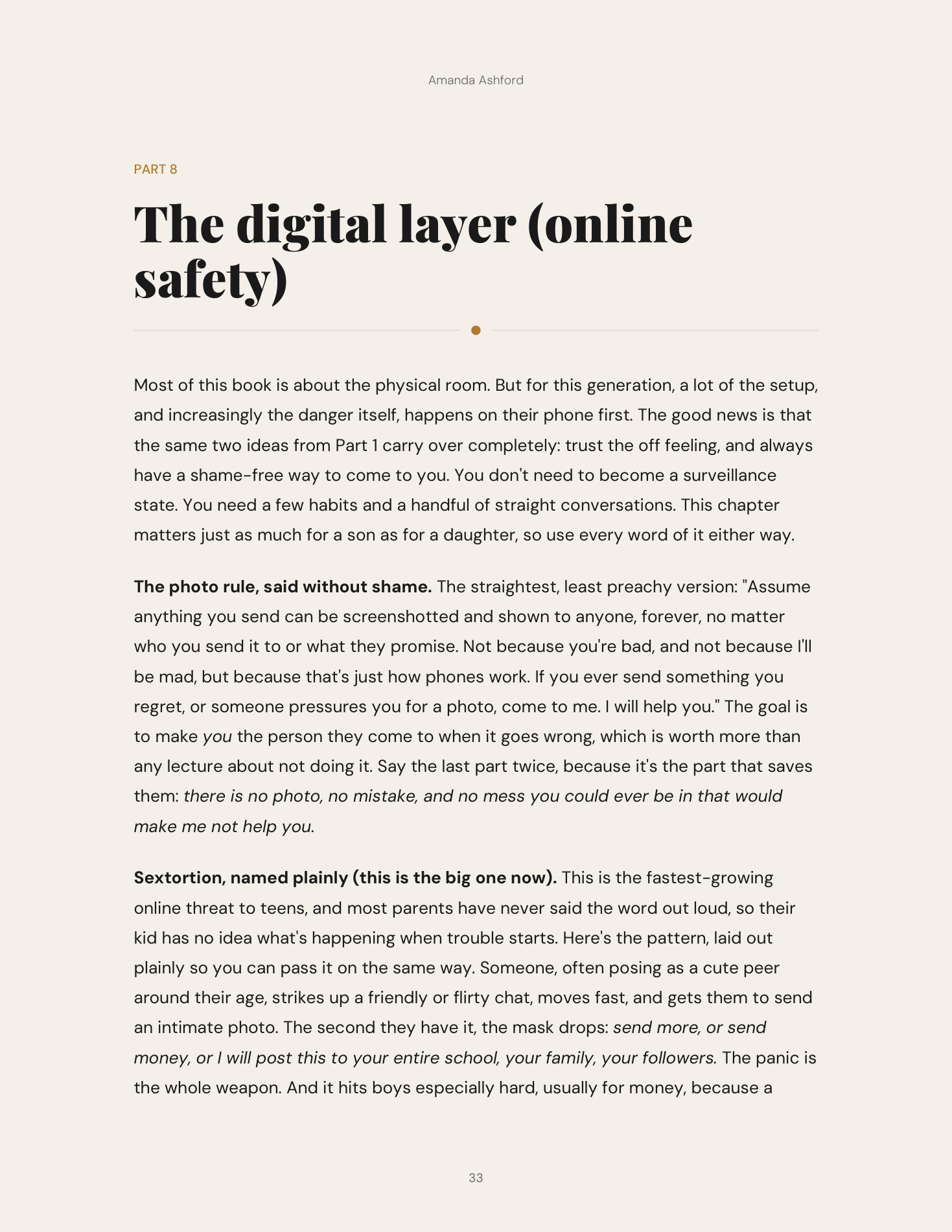
If You've Ever Lain Awake Thinking…
- "I don't know whose house they're at, or if a parent is home."
- "What if they get in a car with someone who's been drinking, and they're afraid to call me?"
- "One pill. That's all it takes now. And they think they're invincible."
- "Someone older is paying them a lot of attention online, and I can't tell if it's harmless."
- "If something went really wrong, would they come to me, or would they be too scared?"
You can't be in the room. But you can be the person they call from it. This guide isn't a fear list or a lecture. It's the calm plan and the exact words that make you the easiest, safest call your teen can make, and get them out before a scary night becomes a tragedy.
What Changes After the Guide
Not a set of new rules to enforce. A different kind of safety, the kind that travels with them.
Who Wrote This

Common Questions
You can't be in the room. You can be the person they call from it.
Read it in one evening. Say the promise tonight. Send your teen the Get-Out Kit before the weekend.